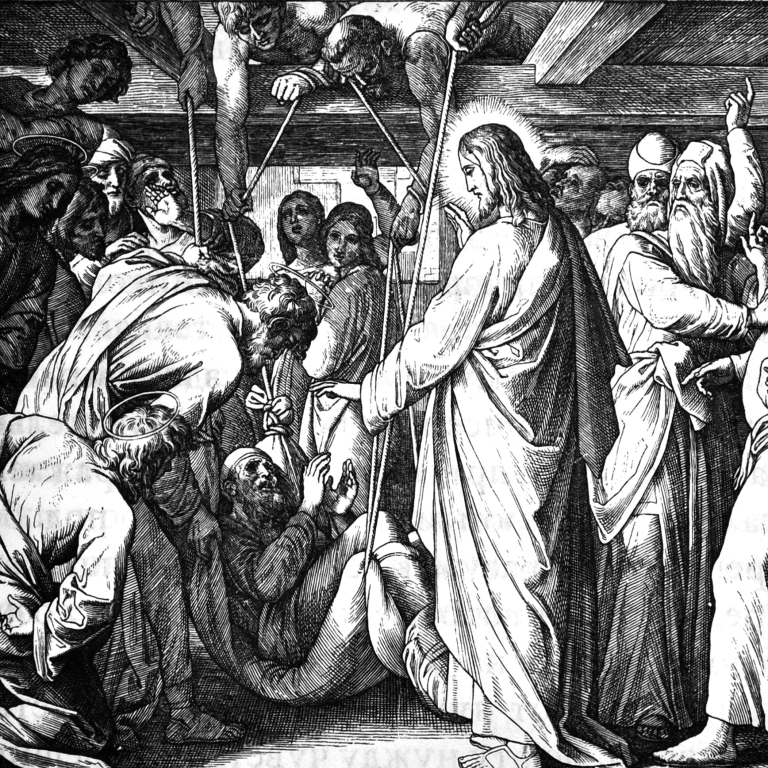
Healing
A remarkable promise was given to the people of Israel in the wilderness: “If you diligently listen to the voice of the LORD your God, do what is right in His sight, pay attention to His commandments, and keep all His statutes, I will put none of the diseases on you that I brought upon the Egyptians, for I am the LORD, your healer.” (Exodus 15:26)
This promise must have been tremendously encouraging to the people of Israel. The Almighty Physician assures His obedient people of health and promises to be their healer—a privilege almost beyond imagination, especially in an age when medicine was still in its infancy. In those days, even a toothache or an inflamed appendix could become life-threatening. What an extraordinary privilege this was for the people of Israel is something we can scarcely comprehend today.
You can find the original text in German here...
1. Divine Healing
Throughout human history, God has repeatedly demonstrated His love by helping people and healing them from disease. For example, the Bible tells how, through the prophet Elijah, the son of a widow was restored to life; how, through the prophet Elisha, the commander Naaman was cleansed of leprosy; and how God granted the terminally ill King Hezekiah fifteen additional years of life in answer to his prayer.
Jesus, who is the very image of God, likewise revealed God's mercy toward mankind. He opened the eyes of a man born blind (cf. John 9:32), healed a demon-oppressed boy who repeatedly fell into fire and water (cf. Matthew 17:15), and restored the withered hand of a man in the synagogue (cf. Mark 3:5). At times, He was surrounded by crowds seeking His help. Matthew 15:30 describes these circumstances: “Great crowds came to Him, bringing the lame, the crippled, the blind, the mute, and many others, and laid them at His feet, and He healed them.” (Cf. also Matthew 4:24.)
One of the greatest encouragements to come to Him is His own expressed willingness to help us. When a man with leprosy pleaded, “Lord, if You are willing, You can make me clean,” the account continues: “Jesus reached out His hand and touched him, saying, ‘I am willing; be cleansed.’” (Luke 5:12–13.)
Such a declaration is deeply comforting to anyone in distress. It would be impossible to list all of His mighty works here. Yet because Jesus has risen from the dead and has become our Advocate before the Father in heaven (cf. Hebrews 9:24), we are still encouraged today to bring our illnesses and afflictions before Him.
Nor was Jesus the only one who healed. When He sent out His disciples to preach the gospel, He also gave them authority to heal the sick (cf. Luke 10:9). He said: “They will lay their hands on the sick, and they will recover.” (Mark 16:18.)
Thanks be to God! To this very day He has made abundant provision for believers. In James 5:14–15 we find this wonderful promise: “Is anyone among you sick? Let him call for the elders of the church, and let them pray over him, anointing him with oil in the name of the Lord. And the prayer offered in faith will restore the one who is sick, and the Lord will raise him up...”
If it is not possible to call for an elder, God has given us two additional precious promises. In Matthew 18:19 we read: “Again I tell you that if two of you on earth agree about anything they ask for, it will be done for them by My Father in heaven.” And there is yet another promise that leaves no room for doubt: “Therefore I tell you, whatever you ask for in prayer, believe that you have received it, and it will be yours.” (Mark 11:24.) Since we find no time limit attached to God's promises, these words remain true today.
Dear soul, claim these promises of God for yourself. If you have not yet experienced them personally, and someone tells you that divine healings of the sick belonged only to the past, then perhaps what is lacking is faith. Maybe this confirms Jesus' solemn question: “Nevertheless, when the Son of Man comes, will He find faith on the earth?” (Luke 18:8.)
From the depths of our hearts, let us thank God for His love and His help in times of sickness and distress. The authors of these lines, together with many other believers, have personally experienced the truthfulness of His promises and bear witness to the wonderful power of God, who either heals instantly or brings about a decisive turning point toward recovery. May this also encourage you, dear soul, to come to Him in faith whenever you face sickness or need.
At this point, however, we must also point out that there are obstacles and causes that may stand in the way of God's healing. These will be considered in the following sections.
2. Reasons Why God Does Not Grant Healing
A lack of faith—or rather, unbelief—is widespread among many professing Christians. Yet there is also an opposite extreme. Some religious groups insist that every illness should be healed by God and teach that all medical treatment should be rejected. In the previous chapter, we demonstrated from Scripture that God is both willing and able to heal. However, there are also circumstances in which we cannot expect His help.
Sin
The greatest and most significant obstacle is a person's unredeemed and sinful condition before God. God said to the people of Israel: “Surely the LORD's hand is not too short to save, nor His ear too dull to hear. But your iniquities have separated you from your God; your sins have hidden His face from you, so that He will not hear.” (Isaiah 59:1–2)
The German translation Hoffnung für Alle expresses this separation from God even more vividly: “Your guilt stands like a wall between you and your God!” We can see this in the life of Saul. After Saul had sinned, he fell into great distress: “When Saul saw the army of the Philistines, he was afraid, and his heart trembled greatly. And when Saul inquired of the LORD, the LORD did not answer him, either by dreams, or by Urim, or by prophets.” (1. Samuel 28:5–6) Because of his sin, Saul lost his fellowship with God, who no longer answered him.
The same principle applies to prayer for the healing of the body. Since the soul is of far greater value than the body, it must first be cleansed from sin. Before praying for physical healing, the spiritual condition of the one praying should be examined and, where necessary, brought into a right relationship with God. Only then can the heart freely and confidently lift its petitions before Him. “Beloved, if our heart does not condemn us, we have confidence before God; and whatever we ask we receive from Him, because we keep His commandments and do what is pleasing in His sight.” (1 John 3:21–22)
It should also be added that in certain cases—or when a healing serves to glorify God—He extends His mercy even to those who are not yet redeemed, if they turn to Him in their distress. Scripture provides several such examples. Naaman was not an Israelite, yet he believed that God could heal him, and he was cleansed (cf. 2 Kings 5). The servant of the centurion was healed because of his master's faith (cf. Matthew 8:13). Likewise, two blind men sought only physical healing, and their request was granted (cf. Matthew 20:30–34).
Several biblical examples indicate that illness was, in certain cases, the consequence of guilt or sin. In John 5:14, after healing the paralyzed man, Jesus said to him: “See, you have become well. Sin no more, lest something worse happen to you.” Likewise, in Luke 5:20 we read: “When Jesus saw their faith, He said, ‘Man, your sins are forgiven you.’” These passages suggest that, in these particular instances, illness was the consequence of sin. Healing could therefore take place only in connection with the forgiveness of that sin. Two examples from the Old Testament illustrate this principle.
When Miriam and Aaron rebelled against Moses, the anger of God was kindled, and He punished Miriam by striking her with leprosy, so that she became “leprous, as white as snow.” Aaron pleaded with Moses for forgiveness and asked him to intercede before God. When Moses heard this, he prayed for her healing. God, however, answered:
“If her father had but spit in her face, should she not be in disgrace for seven days? Let her be shut outside the camp for seven days, and afterward she may be received again.” (Numbers 12:1–14)
When Jeroboam became king, he feared that if the people continued to offer sacrifices in Jerusalem, they would return in loyalty to King Rehoboam. Therefore, he set up an idol and instructed the people to offer sacrifices there instead of traveling to Jerusalem. In this way, he introduced idolatry. As Jeroboam himself was about to offer sacrifice, a prophet from Judah came and prophesied against the altar: “When King Jeroboam heard the word of the man of God, who cried out against the altar at Bethel, Jeroboam stretched out his hand from the altar and said, ‘Seize him!’ But the hand he stretched out against him dried up, so that he could not draw it back to himself... Then the king answered and said to the man of God, ‘Please entreat the favor of the LORD your God, and pray for me, that my hand may be restored to me.’ So the man of God entreated the LORD, and the king's hand was restored to him and became as it was before.” (1 Kings 13:4–6)
Unbelief
Another obstacle to healing is unbelief. For many people, faith is something difficult. How can one believe in something that cannot be seen? Yet the Bible provides us with many examples of faith, and it also gives practical instruction on how faith can be strengthened.
Through faith or unbelief, our attitude toward God is put to the test. It is revealed by our actions. In a certain sense, our faith or unbelief expresses a judgment. To the extent that we trust God and place our faith in Him, we likewise—perhaps unconsciously—affirm His righteousness and trustworthiness. By our unbelief, we render a negative judgment about Him.
When we trust God, we honor Him, and through His promises He, in turn, commits Himself to answering our prayers. When the woman who had suffered from a flow of blood touched Jesus' garment from behind, she was healed immediately because of her faith. Jesus turned to her and said: “Take heart, daughter; your faith has made you well.” (Matthew 9:22)
It is noteworthy that He did not say that the power of God had healed her. Likewise, when He healed a blind man, Jesus again pointed to the role of faith: “Receive your sight; your faith has made you well.” (Luke 18:42) The healing power itself comes from God, but in these examples Jesus clearly emphasizes the importance of our faith and trust.
The Apostle James writes: “But let him ask in faith, without doubting. For the one who doubts is like a wave of the sea, driven and tossed by the wind. For that person must not suppose that he will receive anything from the Lord.” (James 1:6–7)
Testing
Prayer, fasting, and earnest supplication may remain fruitless if we fail to recognize that, in certain cases, God intends to test a person. Job's friends were firmly convinced that his illness and the loss of his possessions and children must have been the result of his transgressing God's commandments. Time and again, they tried to impress this upon him: “Consider now: Who, being innocent, has ever perished? Or where were the upright ever destroyed?” (Job 4:7) They probably could not imagine that God intended to test Job.
Because God is always the same and does not change (cf. James 1:17), we may likewise conclude that He may also allow illness in our lives today in order to test our faith and our faithfulness.
3. Other Aspects of the Topic of Illness
Violating the Laws of Nature
It hardly needs to be explained that God created the world, with everything in it, in such a way that everything is subject to certain laws of nature. There is the law of gravity, the laws of thermodynamics, and many other physical laws. The human body likewise develops according to well-defined laws. All bodily functions are governed by the laws of nature.
On the one hand, God says that "...even the very hairs of your head are all numbered" (Luke 12:7). Every breath we take and every heartbeat occur through HIM. On the other hand, we are compared to a seed: "And He said, 'The kingdom of God is as if a man should scatter seed on the ground, and should sleep by night and rise by day, and the seed should sprout and grow, he himself does not know how. For the earth yields crops by itself: first the blade, then the head, after that the full grain in the head. But when the grain ripens, immediately he puts in the sickle, because the harvest has come.'" (Mark 4:26–29) We eat and grow almost by themselves, all according to the natural laws that God has established. Miracles, by contrast, are relatively rare. A simple observation of the world around us confirms this.
Likewise, it is nothing unusual if someone drinks a cold beverage immediately after strenuous, sweat-inducing work and then becomes ill. This is not an extraordinary intervention by God but rather the natural consequence of violating the laws of nature that God has established.
Illness That Leads to the Glory of God
That illness is not always caused by personal sin is demonstrated in John 9:1–3:
"As He passed by, He saw a man blind from birth. And His disciples asked Him, saying, 'Rabbi, who sinned, this man or his parents, that he was born blind?' Jesus answered, 'Neither this man nor his parents sinned, but that the works of God should be revealed in him.'"
Free Grace
God is not obligated to heal us. HE does so out of His great love and grace. From this perspective, the Bible presents several different situations. For example, we read in the Gospel of Mark: "Wherever He entered villages, cities, or the countryside, they laid the sick in the marketplaces and begged Him that they might touch even the fringe of His garment. And as many as touched Him were made well" (Mark 6:56). Here, everyone who touched Jesus was healed.
In another account, we are told that Jesus entered a portico where many sick, blind, and lame people were lying (cf. John 5:3). It is noteworthy that Jesus healed only one man there, who had been ill for thirty-eight years.
Although Jesus frequently came to Jerusalem, many sick people remained in and around the city after His resurrection. Therefore, at the very beginning of the accounts describing the ministry of the apostles, we are told that they also healed many who were sick and those afflicted by unclean spirits through the power of God (cf. Acts 5:16).
C. W. Naylor was converted at the age of eighteen. Seven years later he was ordained as a minister in the Church of God in the United States. Ten years later, on June 28, 1909, he suffered an accident that left him confined to bed until his death on February 21, 1950. Paralyzed, helpless, and seldom free from pain, he was no longer able to preach in church assemblies. Nevertheless, during his illness he wrote eight books, including The Secret of a Happy Heart, and composed 150 hymns. He ministered to those who visited him, counseled them, prayed for the sick, and the Lord healed them. Yet he himself remained confined to his bed. Why did God not heal him? Perhaps he was able to bear greater fruit for God from his bed than he could have from behind the pulpit. Only God knows.
4. Is It a Sin to Go to a Doctor?
Can it be considered sinful or wrong if one person wants to help another in time of need? For example, by removing a splinter from a neighbor's finger or dressing a wound; by trying to relieve or even cure a cold with tea and appropriate herbs; or by helping one person with glasses and another through surgery.
In the Old Testament, God even commanded His people to help the animals of their enemies: "If you meet your enemy's ox or his donkey going astray, you shall surely bring it back to him again. If you see the donkey of one who hates you lying under its burden, and you would refrain from helping it, you shall surely help him with it." (Exodus 23:4–5)
How much more, then, does God desire that people should receive help! Therefore, it cannot possibly be sinful for a physician to help those who are ill. Likewise, seeking medical care is not a sin but rather the acceptance of a form of assistance that has continually developed and improved throughout history and has become a recognized profession.
Already in Jeremiah 8:22, the work of a physician is presented positively rather than as something sinful: "Is there no balm in Gilead? Is there no physician there? Why then has the health of the daughter of my people not been restored?" Although the physician here serves merely as an illustration of God's healing work among His people, we may assume that God would never use a negative image to portray something positive. Therefore, neither the work of a physician nor the help he provides should be regarded negatively.
Jesus Himself compared His own ministry to that of a physician: "Those who are well have no need of a physician, but those who are sick. I did not come to call the righteous, but sinners, to repentance" (Mark 2:17). If the work of a physician were sinful, the churches in the days of the Apostle Paul would not have tolerated physicians among their members, nor would Christians have made use of medical care. Yet we read in Colossians 4:14: "Luke, the beloved physician, and Demas greet you."
There is, however, another side to this matter. Jeremiah 17:5 says: "Thus says the LORD: 'Cursed is the man who trusts in man and makes flesh his strength, whose heart departs from the LORD.'" A Christian's hope must never rest unconditionally on the limited knowledge and imperfect abilities of physicians. We have a God who is both willing and able to help us in every situation—whether great or small. Coming to HIM demonstrates our trust in HIM and brings HIM honor.
Especially in our own time, we can easily be dazzled by modern technology, advanced medical knowledge, and other supposed achievements of medicine. Therefore, it is essential to live a daily life of faith and to maintain close fellowship with God, so that He may help us, especially in situations where no physician can. In this way our faith is strengthened, and God receives the glory.
A brother known to us once testified how God healed him. When he became ill, he prayed: "Lord, please heal me! You are able to do it. You know that I have to go to work tomorrow morning. If You do not heal me, I will have to go to the doctor in order to obtain a medical certificate for my employer." His faith was put to the test, but shortly before he was due to begin work, God healed him. To HIM be all honor and all thanks!