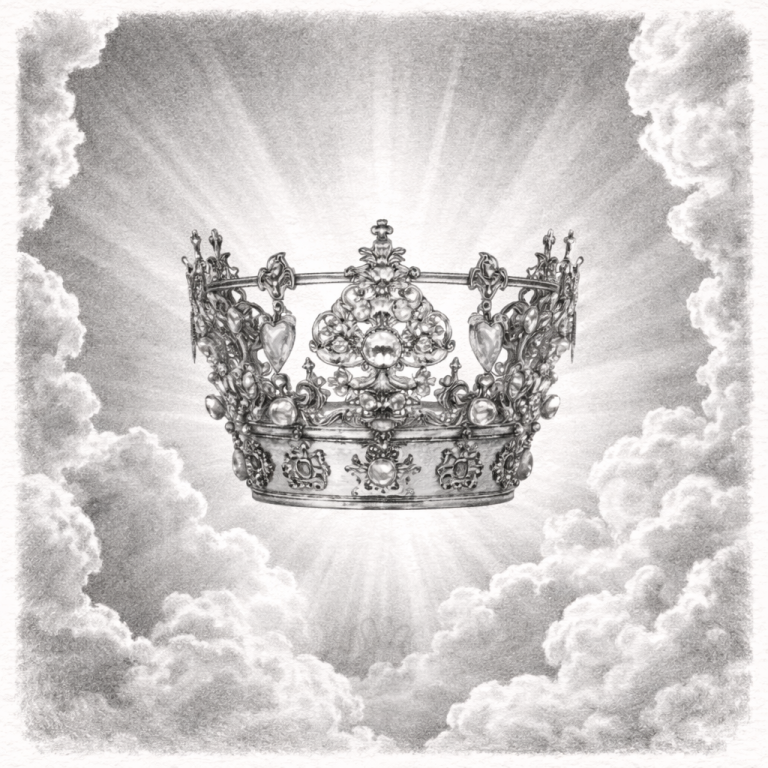
The Kingdom of God
In many passages of Scripture, especially in the Prophets and throughout the New Covenant, we encounter the words "kingdom" and "reign." In order to interpret biblical prophecy and the parables of Jesus correctly, it is necessary first to define the term "kingdom." According to the Scriptures, this was the prevailing form of government in those days. Since we no longer have kingdoms comparable to those that existed two or three thousand years ago, and cannot observe such a form of government today, let us turn to the descriptions given in the Bible.
You can find the original text in German here...
How Should We Understand a Kingdom Today?
What is almost impossible for us to imagine today is the nearly unlimited authority possessed by some kings. The prophet Daniel described the authority of King Nebuchadnezzar with these words: he ruled over all, and even "the beasts of the field and the fowls of the heaven hath he given into thine hand" (cf. Dan. 2:37-38). A king could not only confiscate the property of his subjects—even their lives were of little value in those days. In the book of Esther we find the law that no one was permitted to enter the court of King Ahasuerus unless summoned by the king. Whoever violated this law was put to death, unless the king held out to the visitor the golden sceptre (cf. Est. 4:11).
Another example is found in the account of King Herod. While celebrating his birthday with his nobles and chief men, he was so pleased with the dancing of a young woman that he promised to give her whatsoever she desired, even unto the half of his kingdom. Her request was extraordinary: she asked for the head of John the Baptist (cf. Matt. 14:6-11). Here again there were neither courts of justice nor legal advocates, as we know them today. At the king's command, the man who was well known throughout all Judea was immediately beheaded, and his head was presented to the young woman.
Although not every king possessed such extensive authority, the kingdoms described in the parables and prophecies of the Bible are generally presented as being ruled by a sovereign king who has laws, subjects, an army, and a territory under his authority. Therefore, in the Kingdom of God there are no parliaments, no elections, and no debates concerning how problems should be solved. As we proceed, we shall see that the parables and prophecies concerning the Kingdom of God consistently reflect this same structure of government.
"All power is given unto me in heaven and in earth..." Jesus declared to His disciples on the Mount of Olives (Matt. 28:18). At this point one brief explanation should be added. The words "is given" indicate that this authority was received. God the Father has given all authority unto His Son, Jesus Christ. Paul adds to this thought when he describes the future consummation of God's plan: "Then cometh the end, when he shall have delivered up the kingdom to God, even the Father; when he shall have put down all rule and all authority and power" (I Cor. 15:24).
The Global Kingdom of God
(Matt. 13:47-50; Matt. 25:31-33; Matt. 13:24-30; 38-42)
Matt. 13:47-50: "Again, the kingdom of heaven is like unto a net, that was cast into the sea, and gathered of every kind: Which, when it was full, they drew to shore, and sat down, and gathered the good into vessels, but cast the bad away. So shall it be at the end of the world: the angels shall come forth, and sever the wicked from among the just, And shall cast them into the furnace of fire: there shall be wailing and gnashing of teeth."
Here Jesus declares that at the end of the age—at His second coming—a judgment will take place in which the righteous will be separated from the wicked. The scene of these events is not confined to a particular country, nor does it concern only one chosen nation. Rather, the whole earth will be involved. The same truth is found in Matt. 25:31-33: "When the Son of man shall come in his glory, and all the holy angels with him, then shall he sit upon the throne of his glory: And before him shall be gathered all nations: and he shall separate them one from another, as a shepherd divideth his sheep from the goats: And he shall set the sheep on his right hand, but the goats on the left." Both parables refer to the global Kingdom of God in the sense that they concern all the nations of the earth.
God created the heavens and the earth (Gen. 1:1). He rules over the entire universe. Everything visible around us was created to be temporary (II Cor. 4:18). Yet the visible—the temporal—is of far less value than the invisible and eternal. Therefore, the Bible speaks primarily of spiritual and everlasting realities. In order to test our spiritual condition, God has, as it were, established a visible background for this purpose. He created everything that we see around us and then, so to speak, withdrew into the background. He allows all things to grow according to the order He has established. "So is the kingdom of God, as if a man should cast seed into the ground; And should sleep, and rise night and day, and the seed should spring and grow up, he knoweth not how. For the earth bringeth forth fruit of herself... But when the fruit is brought forth, immediately he putteth in the sickle, because the harvest is come" (Mark 4:26-29). Everything that takes place on this earth moves toward the great purpose of our King—to prepare mankind for His Kingdom. Before this, He tested the angels: "...the angels which kept not their first estate, but left their own habitation, he hath reserved in everlasting chains under darkness unto the judgment of the great day..." (Jude 6). Now He is also proving mankind. Therefore, the parable in Mark 4:26-29 likewise refers to the global Kingdom of God.
In another parable, the parable of the tares among the wheat, Jesus speaks of His purpose: "Let both grow together until the harvest: and in the time of harvest I will say to the reapers, Gather ye together first the tares, and bind them in bundles to burn them: but gather the wheat into my barn" (Matt. 13:30). Jesus Himself explains the symbols: "...the field is the world... the good seed are the children of the kingdom; but the tares are the children of the wicked one; The enemy that sowed them is the devil; the harvest is the end of the world; and the reapers are the angels... As therefore the tares are gathered and burned in the fire; so shall it be in the end of this world. The Son of man shall send forth his angels, and they shall gather out of his kingdom all things that offend, and them which do iniquity; And shall cast them into a furnace of fire: there shall be wailing and gnashing of teeth" (Matt. 13:38-42).
The expressions "the world" and "the end of the world" clearly show that this parable is speaking of His global Kingdom, of mankind upon the earth, and of the final judgment. That judgment concerns the visible creation, where "...the heavens shall pass away with a great noise, and the elements shall melt with fervent heat..." (II Pet. 3:10). It also concerns the souls of all who dwell upon the earth, as described in Rev. 20:11-15.
Israel—A Kingdom of God
(Matt. 21:33-43; Luke 14:16-24; Matt. 22:2-14)
Matt. 21:33-43
When reading other parables concerning the Kingdom of God, it becomes evident that not all of them can refer to the global Kingdom embracing the whole world. They describe different spheres of God's rule. For example, in Matt. 21:33-43 Jesus speaks of a householder who planted a vineyard, let it out to husbandmen, and then went into a far country. At harvest time he sent his servants to receive his share of the fruit of the vineyard. But the husbandmen proved unfaithful to their master. They mistreated or killed the servants who had been sent. Finally, they even killed his son. Beginning with verse 40 we read: "When the lord therefore of the vineyard cometh, what will he do unto those husbandmen? They say unto him, He will miserably destroy those wicked men, and will let out his vineyard unto other husbandmen, which shall render him the fruits in their seasons. ... The kingdom of God shall be taken from you, and given to a nation bringing forth the fruits thereof."
To understand this parable correctly, we must begin with its conclusion. The words, "The kingdom of God shall be taken from you," show that, in the days of Jesus, there already existed a Kingdom of God among the Jewish people, and that it would be taken away from them. Therefore, this parable cannot refer to the global universe or to the entire earth, but only to the people of Israel. That God Himself ruled over Israel is clearly seen from His answer in the book of Samuel. When the people asked Samuel to appoint a king, Samuel sought the counsel of God. The Lord answered him, "...they have not rejected thee, but they have rejected me, that I should not reign over them" (I Sam. 8:7).
We must keep the explanation of this parable brief, since a detailed exposition would go beyond the scope of this article. God is compared to a householder. He entered into a covenant with Israel and gave them His law—He planted a vineyard. Those who were entrusted with its care—the priests and the scribes—were to be examples to the people and faithfully instruct them. Again and again God sent His servants, the prophets, expecting the proper spiritual fruit. Such fruit included love for God and for one's neighbour, mercy, faithfulness, and gratitude. But Israel did not render these fruits to God in the way He required. Instead, they were content merely to observe outward regulations. We find many examples of this, especially in the writings of the prophets. In Isa. 29:13 the Lord reproves His people because they draw near unto Him only with their mouths and honour Him with their lips, while their hearts are far from Him, and their fear of Him is nothing more than a commandment learned from men. A representative example of this problem is found in Matt. 23. There Jesus exposes the hypocritical religion of the Pharisees, who "...indeed appear beautiful outward, but are within full of dead men's bones, and of all uncleanness" (v. 27). Therefore, this kingdom—that exclusive covenant relationship with the people of Israel—would be taken from them and given to others.
Paul explains this plainly in Rom. 11: "...through their fall salvation is come unto the Gentiles" (v. 11; see also Acts 11:18; Rom. 2:17, 23). In Mark 12:1-10 the chief priests, the scribes, and the elders reacted to this same parable in the following way: "And they sought to lay hold on him, but feared the people: for they knew that he had spoken the parable against them." It is therefore evident that, in these parables, God is presented as the Ruler over the people of Israel.
In Luke 14:16-24 and Matt. 22:2-14 Jesus compares the joy of serving God to a great feast. Those who serve God experience genuine joy and true satisfaction. God is the source of all that is good; He gives comfort, contentment, and happiness to the heart. At the same time, man must keep his own desires under control, for "...the flesh lusteth against the Spirit" (Gal. 5:17). In this inward conflict, man often yields to his own desires and, through the subtle deception and assistance of Satan, is led to seek joy in the pleasures of this world. Against this background, the following parables of Jesus become much easier to understand.
Luke 14:16-24
While Jesus was dining in the house of one of the chief Pharisees, one of those who sat at the table said unto Him, "Blessed is he that shall eat bread in the kingdom of God!" (Luke 14:15). Jesus then answered with a parable about a certain man who prepared a great supper and invited many guests. Yet his servant was unsuccessful, because every one of those who had been invited made excuses in his own way and refused to come. Then the master became angry and said to his servant, "Go out into the highways and hedges, and compel them to come in, that my house may be filled. For I say unto you, That none of those men which were bidden shall taste of my supper" (Luke 14:16-24).
Here again, Jesus was speaking of the people of Israel. They despised the joy of serving God and chose to walk in their own ways. Long before this, the Lord had reproved Israel through the prophet Jeremiah: "For my people have committed two evils; they have forsaken me the fountain of living waters, and hewed them out cisterns, broken cisterns, that can hold no water" (Jer. 2:13). The thought is the same, except that here joy is compared, not with a feast, but with water. In the dry climate of Palestine and the surrounding wilderness, water was a welcome refreshment and is therefore used elsewhere in Scripture as a picture of true joy. God now extends the invitation to all nations. The Gospel is to be proclaimed to every people.
We should again draw the reader's attention to one important fact: even in relation to the people of Israel, the Kingdom of God does not refer to outward, visible things, nor to the human body, but to that which is of greatest importance—the souls of those who believe.
Matt. 22:2-14
After these explanations, it should not be difficult to understand the parable in Matt. 22:2-14. There is, however, one difference between this and the other parables. Here the emphasis is on the spiritual standing of the people of Israel within the Kingdom of God. There is yet another definition of the Kingdom which we shall consider more fully in the next chapter.
Returning to Matt. 22, Jesus again speaks of the wedding feast prepared by a king for his son. Those who had been invited rejected the king's invitation and "went their ways, one to his farm, another to his merchandise: And the remnant took his servants, and entreated them spitefully, and slew them." Then the king was wroth, "and he sent forth his armies, and destroyed those murderers, and burned up their city."
Here again Jesus points out that God would no longer reserve this spiritual joy exclusively for His chosen people. From that time forward, everyone who is found may come to the marriage feast of the Son—those gathered from "the highways," both "bad and good." All nations are invited to this wedding feast, to this joy of serving God, that Jesus might be "the firstborn among many brethren" (Rom. 8:29).
Those who have been justified through the blood of Jesus Christ and are clothed with the garments of righteousness may share in this wedding feast—that is, in this joy. But a hypocrite has no place there. He is recognized by the King and cast "into outer darkness: there shall be weeping and gnashing of teeth" (Matt. 22:13).
Jesus expresses this same truth plainly in Matt. 8:11-12: "And I say unto you, That many shall come from the east and west, and shall sit down with Abraham, and Isaac, and Jacob, in the kingdom of heaven. But the children of the kingdom shall be cast out into outer darkness: there shall be weeping and gnashing of teeth."
The Spiritual Kingdom of God
(Luke 16:16; Luke 17:20; Dan. 2:35; Mark 4:30-31)
In Matt. 3:2, John appeared before the people with the message, "Repent ye: for the kingdom of heaven is at hand." From these words it is evident that this Kingdom had not yet come. Therefore, it cannot be either of the two forms of the Kingdom of God discussed previously. Jesus Himself also speaks of yet another kingdom, or sphere of His rule: "The law and the prophets were until John: since that time the kingdom of God is preached, and every man presseth into it" (Luke 16:16). In another place He says, "Verily I say unto you, That there be some of them that stand here, which shall not taste of death, till they have seen the kingdom of God come with power" (Mark 9:1). Both passages point to a Kingdom that was yet to come.
To understand this more clearly, let us consider another passage of Scripture: "And when he was demanded of the Pharisees, when the kingdom of God should come, he answered them and said, The kingdom of God cometh not with observation: Neither shall they say, Lo here! or, lo there! for, behold, the kingdom of God is within you" (Luke 17:20-21). It is therefore evident that this is a Kingdom which has its place within us—in our hearts. Those who have had their hearts cleansed through the blood of Jesus Christ and have surrendered them to God belong to this Kingdom. In them God has established His Kingdom and reigns within their hearts. It is an invisible, spiritual Kingdom. Daniel spoke of this Kingdom when he wrote: "And in the days of these kings shall the God of heaven set up a kingdom, which shall never be destroyed... it shall break in pieces and consume all these kingdoms, and it shall stand for ever" (Dan. 2:44).
Although Jesus did not enter Jerusalem with an army, nor negotiate political agreements with the rulers of His day, but instead had only twelve unlearned disciples, His Gospel spread throughout the whole world. "Whereunto shall we liken the kingdom of God? or with what comparison shall we compare it? It is like a grain of mustard seed, which, when it is sown in the earth, is less than all the seeds that be in the earth: But when it is sown, it groweth up, and becometh greater than all herbs, and shooteth out great branches; so that the fowls of the air may lodge under the shadow of it" (Mark 4:30-32). Hundreds of millions of people have given their hearts to Jesus and have been willing to remain faithful unto Him even unto death.
When Pilate asked Jesus why He had been delivered to him and why He was called a king, Jesus answered: "My kingdom is not of this world: if my kingdom were of this world, then would my servants fight, that I should not be delivered to the Jews: but now is my kingdom not from hence. Pilate therefore said unto him, Art thou a king then? Jesus answered, Thou sayest that I am a king. To this end was I born, and for this cause came I into the world, that I should bear witness unto the truth. Every one that is of the truth heareth my voice" (John 18:36-37).
As the parables already considered have shown, God often speaks through His Word by means of pictures and illustrations. Yet His concern is always with that which is of greatest importance—the hearts of men and their relationship with Him. Although, for the sake of clearer understanding, we have distinguished between the global Kingdom, God's Kingdom over Israel, and the spiritual Kingdom, they all ultimately relate to the inner man.
The Heavenly Kingdom of God
(Heb. 12:22-24; II Tim. 4:18; I Cor. 15:40-50; Gal. 5:19-21; Eph. 5:5; Rev. 1:9)
This spiritual Kingdom includes not only Christians who are still living on earth, but also the souls of those who are already in heaven. The Epistle to the Hebrews explains this to the believers: "...ye are come unto mount Sion, and unto the city of the living God, the heavenly Jerusalem, and to an innumerable company of angels, To the general assembly and church of the firstborn, which are written in heaven, and to God the Judge of all, and to the spirits of just men made perfect, And to Jesus the mediator of the new covenant" (Heb. 12:22-24).
When believers have finished their spiritual conflict, a rich inheritance awaits them. They shall pass from faith to sight. Paul writes with full assurance concerning this hope: "And the Lord shall deliver me from every evil work, and will preserve me unto his heavenly kingdom" (II Tim. 4:18).
In that Kingdom we shall have another body. It should be evident to everyone that flesh and blood cannot inherit that Kingdom (I Cor. 15:40-50). Sin has no place there. Paul lists the works of the flesh in Gal. 5:19-21: "Adultery, fornication, uncleanness, lasciviousness, Idolatry, witchcraft, hatred, variance, emulations, wrath, strife, seditions, heresies, Envyings, murders, drunkenness, revellings, and such like: ...they which do such things shall not inherit the kingdom of God." (See also Eph. 5:5.)
All true Christians know that they already belong to this Kingdom. In several places in the New Testament we find words expressing this full assurance. John writes in Rev. 1:9: "I John, who also am your brother, and companion in tribulation, and in the kingdom..." Whoever has become a child of God and keeps his heart pure is already a citizen of this invisible spiritual Kingdom and looks forward with full assurance to his incorruptible inheritance.
You and the Kingdom of God
And what about you? Have you already become a citizen of this unshakable, righteous, and everlasting Kingdom? Have you earnestly searched the Scriptures to learn what the privileges and responsibilities of this Kingdom are? Remember, to judge oneself righteous can have fatal consequences. Jesus said to the Jews, "Verily I say unto you, That the publicans and the harlots go into the kingdom of God before you" (Matt. 21:31). Yet it is not merely a matter of going before others; what truly matters is reaching the goal. Therefore, we must carefully observe the conditions God has set forth in His Word. Jesus said, "Verily I say unto you, Except ye be converted, and become as little children, ye shall not enter into the kingdom of heaven" (Matt. 18:3). To learn more about righteousness by faith rather than by works, please read the article "Good Works Before Conversion" on this website. How do His servants use the talents entrusted to them? In Matt. 19:23 Jesus speaks to His disciples about the relationship to earthly possessions: "A rich man shall hardly enter into the kingdom of heaven." These three passages clearly show that God desires to bring about a change of heart and a complete reorientation of life in those who wish to serve Him.
What, then, can we say about the time when this Kingdom came? The coming of the Kingdom of God does not lie in the distant future. Jesus even spoke to His own disciples about its soon coming. He said, "Verily I say unto you, That there be some of them that stand here, which shall not taste of death, till they have seen the kingdom of God come with power" (Mark 9:1). This was fulfilled on the Day of Pentecost. The power of which Jesus spoke does not consist merely in the signs and miracles God performed at that time, but above all in the power of the Holy Spirit, who gives men strength to live holy lives and to sin no more. It should also be noted that the words, "Thy kingdom come..." (Matt. 6:10), in our Lord's model prayer were applicable only before the Kingdom was established. The Kingdom has come, the prayer has been answered, and its fulfillment has long since taken place. Therefore, to continue praying these words today as though the Kingdom were still future is no longer appropriate.
Just as the sower scatters his seed, so Jesus still speaks to you today (cf. Matt. 13:3-8, 18-23). Will the Good News be taken out of your heart by Satan? Do you desire to bear thirtyfold, sixtyfold, or even an hundredfold fruit for the heavenly Kingdom? Jesus desires to reign in your heart and to have fellowship with you. Peter encourages us with these words: "Wherefore the rather, brethren, give diligence to make your calling and election sure: for if ye do these things, ye shall never fall: For so an entrance shall be ministered unto you abundantly into the everlasting kingdom of our Lord and Saviour Jesus Christ" (II Pet. 1:10-11).