Is There a Trinity?
For a Christian who has only recently begun to live a life of faith, the subject of God the Father and the Son may not seem especially important at first. One may live a God-devoted life for many years and still remain without a clear understanding of this question. Yet because this subject touches on many other matters of faith, sooner or later one will certainly be confronted with it. It is by no means an unimportant topic. This can be seen, among other things, from the life of Jesus.
You can find the original text in German here...
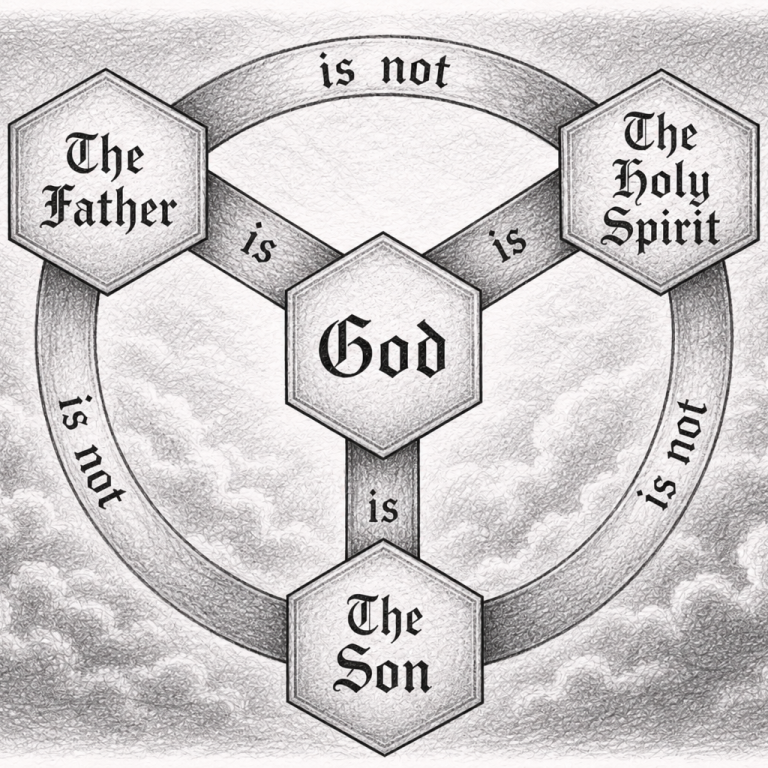
Background to the Topic of the Trinity
During His earthly ministry, Jesus had numerous confrontations with the Pharisees and the scribes, which became increasingly intense toward the end of His work. The raising of Lazarus and His triumphal entry into Jerusalem further intensified the envy and hatred of His opponents. After His arrest, false witnesses were sought against Him, and many accusations were brought forward. Yet only one claim proved decisive for the death sentence: that He was the "Son of God." "The Jews answered him, 'We have a law, and according to our law He ought to die, because He made Himself the Son of God.'" (John 19:7)
The course of this trial can be followed clearly in Matthew 26:59–66: "Now the chief priests, the elders, and all the council sought false testimony against Jesus to put Him to death, but found none. Even though many false witnesses came forward, they found none. But at last two false witnesses came forward and said, 'This fellow said, "I am able to destroy the temple of God and to build it in three days."' And the high priest arose and said to Him, 'Do You answer nothing? What is it these men testify against You?' But Jesus kept silent. And the high priest answered and said to Him, 'I put You under oath by the living God: Tell us if You are the Christ, the Son of God!' Jesus said to him, 'It is as you said. Nevertheless, I say to you, hereafter you will see the Son of Man sitting at the right hand of the Power, and coming on the clouds of heaven.' Then the high priest tore his clothes, saying, 'He has spoken blasphemy! What further need do we have of witnesses? Look, now you have heard His blasphemy! What do you think?' They answered and said, 'He is deserving of death.'" Immediately afterward we read: "Then the whole multitude of them arose and led Him to Pilate." (Luke 23:1)
The reason for this attitude is clearly explained in John 5:18: "Therefore the Jews sought all the more to kill Him, because He not only had broken the Sabbath, but also said that God was His Father, making Himself equal with God."
The controversy over the nature of Christ has never ceased and remains a subject of debate to this very day. Throughout the history of Christianity, there have been numerous disputes and divisions arising from differing views on this question.
This is reflected in the formulations adopted at the Council of Nicaea in A.D. 325. The same issue was addressed at the Council of Constantinople (A.D. 381), in the Formula of Union between Cyril of Alexandria and John of Antioch (A.D. 433), and at the Council of Chalcedon (A.D. 451). Between the First Council of Nicaea (325) and the First Council of Constantinople (381), no fewer than eighteen different Arian creeds were composed, some of which contradict one another.
It would be far beyond the scope of this article even to summarize all the church divisions and internal disputes among the various Christian denominations connected with this issue. Wars were fought, and so-called heretics were burned at the stake—the list of conflicts surrounding this subject is very long.
Anyone wishing to form an opinion by studying the historical controversies would have to devote years to an intensive investigation of the subject. Even then, it remains doubtful whether the true essence of the matter could be discovered in that way. For this reason, it is recommended that the answer be sought through prayer and the Word of God. God alone is the source and fountain of true knowledge. "...Even so no one knows the things of God except the Spirit of God." (1 Corinthians 2:11)
2. Without Jesus There Is No Salvation
It is very much in the devil's interest to create confusion concerning the person of Jesus Christ. He knows that "...there is salvation in no one else, for there is no other name under heaven given among men by which we must be saved" (Acts 4:12). Because Jesus is the central figure in God's work of redemption, Satan seeks to neutralize Him in human perception or to erase Him altogether. He is satisfied with religions in which the person of the Son of God is absent (such as Buddhism) or in which He is considered irrelevant to humanity's salvation (for example, Jesus in Islam).
Immediately after the resurrection, Satan attempted to distort the facts. The chief priests and elders gave the soldiers money to spread the following lie: "...His disciples came by night and stole Him away while we slept." (Matthew 28:12–15) Satan knows that if Jesus had not truly died but had merely fallen unconscious, He could not be regarded as the sacrifice for our sins. Likewise, if He were not the only begotten Son of God—unique and one of a kind in His nature and origin—but merely an ordinary human being, then His blood could not atone for the sins of all mankind.
Through the fall of the first human beings, fellowship between God and humanity was broken: "...your iniquities have separated you from your God; and your sins have hidden His face from you, so that He will not hear." (Isaiah 59:2) To remove this separation, God appointed mediators under the Old Covenant—namely, the priests. Here is one example from the Law of Moses: "And the priest shall make atonement for him before the LORD with the ram of the trespass offering for his sin which he has committed. And the sin which he has committed shall be forgiven him." (Leviticus 19:22) The same ministry is also required under the New Covenant. Paul explains: "For there is one God and one Mediator between God and men, the Man Christ Jesus." (1 Timothy 2:5)
If Jesus and God the Father were one and the same person, there would be no Mediator between God and mankind. There would be no one worthy to undertake this priestly ministry under the New Covenant. Many other doctrinal concepts that depart from the true nature of Christ can likewise destroy the very heart of the Good News. Consequently, the question concerning the person of Jesus is not merely a matter of theological knowledge. Only through a correct understanding of the person of Jesus can God's plan of redemption be faithfully proclaimed to humanity.
3. God Provides the Answer
A legitimate question may now be asked: If this issue has not been resolved by so many scholars throughout history, how can anyone presume to solve such a great problem? Our answer is this: Wisdom and the key to solving every problem are found with God. He alone is able to reveal a mystery. The prophet Daniel answered King Nebuchadnezzar accordingly: "The mystery which the king has demanded, the wise men, the astrologers, the magicians, and the soothsayers cannot declare to the king. But there is a God in heaven who reveals mysteries... But as for me, this mystery has not been revealed to me because I have more wisdom than anyone living, but in order that the interpretation may be made known to the king, and that you may understand the thoughts of your heart." (Daniel 2:27–28, 30)
All believers throughout history who have sincerely searched into this subject, yet to whom it was not revealed, were not necessarily less intelligent or less filled with the Holy Spirit. It simply was not yet the time when God intended to reveal this mystery. God Himself determines the appointed time at which a mystery is to be made known.
After the prophet Daniel had written down many prophecies, God said to him: "But you, Daniel, shut up the words, and seal the book until the time of the end. Many shall run to and fro, and knowledge shall increase." (Daniel 12:4) Likewise, God spoke to the prophet Habakkuk: "Write the vision and make it plain on tablets, that he may run who reads it. For the vision is yet for an appointed time..." (Habakkuk 2:2–3)
To the one true God in heaven alone belong all thanks, praise, and glory for His faithfulness and love toward His servants—both the prophets of old and us today. He alone can unveil a mystery and grant true understanding. In His love, He reveals both the past and the future (cf. Genesis 18:17; Amos 3:7; Revelation 1:1).
4. A Puzzle? Not at All!
The fundamental issue is summarized concisely in 1 Corinthians 8:5–6: "For even if there are so-called gods, whether in heaven or on earth—as indeed there are many gods and many lords—yet for us there is one God, the Father, from whom are all things, and we for Him; and one Lord, Jesus Christ, through whom are all things, and we through Him." On the one hand, this passage states that there are many gods, yet at the same time it declares that there is only one God. The same principle also applies to the title "Lord."
Let us begin with the title "Lord," since it is easier to explain. There are many lords in the world—many rulers and persons of authority who exercise power within a certain sphere. For many centuries, "lord" was a title of rank used for nobles, princes, counts, and members of the clergy. Today it is simply a form of polite address. This becomes obvious when we remember that in Germany men are commonly addressed as "Herr" ("Mr." or "Sir").
The Scriptures likewise use the word in this ordinary sense. We read that "Sarah obeyed Abraham, calling him lord" (1 Peter 3:6). See also Genesis 23:15; Genesis 24:18; 1 Samuel 1:15; 2 Samuel 14:17, and many other passages. There are indeed many lords. Yet there is only one Lord who is Lord over all lords—Jesus Christ, to whom all authority in heaven and on earth has been given. "And Jesus came and spoke to them, saying, 'All authority has been given to Me in heaven and on earth.'" (Matthew 28:18) Likewise, Paul writes: "...which He worked in Christ when He raised Him from the dead and seated Him at His right hand in the heavenly places, far above all principality and power and might and dominion, and every name that is named, not only in this age but also in that which is to come. And He put all things under His feet, and gave Him to be head over all things to the church..." (Ephesians 1:20–22) Thus both statements are true: there are many lords, and above them all there is one Lord.
The same principle also applies to the title "God." In the Holy Scriptures, more than one person is called "God." In Exodus 4:16, Moses is called "God": "...and you shall be to him as God." (See also Exodus 7:1.) Not only Moses, but other people as well can be called "gods." Jesus Himself said: "Is it not written in your law, 'I said, "You are gods"'?" (John 10:34) Jesus Himself is also called God: "Thomas answered and said to Him, 'My Lord and my God!'" (John 20:28) Jesus did not correct Thomas but thereby confirmed his confession.
Some hold the view that "God" is a personal name. However, it is actually a designation of a position or office. Just as with the title "Lord," a twofold statement can also be made concerning "God." There are several who are called gods, and there is one God who is above all.
Paul writes: "For this reason I bow my knees to the Father of our Lord Jesus Christ, from whom every family in heaven and on earth is named..." (Ephesians 3:14–15) Likewise: "Furthermore, we have had human fathers who corrected us, and we paid them respect. Shall we not much more readily be in subjection to the Father of spirits and live?" (Hebrews 12:9) These two statements apply only to God the Father, who is above all.
Because both the declaration that there is one God and the designation of other persons as "god" appear repeatedly side by side in Scripture, an apparently insoluble contradiction arises. This example shows how God can reveal even simple truths—or withhold them from someone. Without God's grace, even the greatest scholarship is of no avail.
5. The Distinct Attributes of the Father and the Son
From the earliest centuries, the Church Fathers contributed significantly to the confusion and disputes among Christians through philosophically influenced interpretations. Some of them referred to God as a "person." However, since the term person is defined differently in sociology than in law or philosophy, it cannot be applied to God with complete precision. The terms individual and personality are likewise not entirely appropriate. The Holy Scriptures simply declare: "God is Spirit..." (John 4:24) This is the most accurate description. Therefore, in this study, the word "person" will be used only occasionally and solely for the sake of simplifying the explanation.
In the Old Testament, the Hebrew word ĕlôhîym ("God") occurs in more than 2,500 passages. The Greek word theos ("God") appears more than 1,300 times in the New Testament. Although the title "God" usually refers to God the Father, in some passages Jesus is also called God. The same applies to titles such as "Savior," "Lord," and others.
To better understand the position of God the Father and Jesus, we will first consider only those passages that highlight their distinct attributes, while keeping the accompanying comments to a minimum. Afterwards, we will examine the similarities between God the Father and Jesus.
The Following Passages Refer Exclusively to Jesus Christ
Jesus, the "Lamb" — John 1:29: "The next day John saw Jesus coming toward him, and said, 'Behold! The Lamb of God who takes away the sin of the world!'"
It would be contradictory for God the Father to be both the sacrifice and the One who accepts the sacrifice.
Jesus, the "Servant" — Acts 3:13: "The God of Abraham, Isaac, and Jacob, the God of our fathers, glorified His Servant Jesus, whom you delivered up and denied in the presence of Pilate, when he was determined to let Him go."
If God Almighty had become a servant, whom would He then serve?
Jesus, the "Mediator" — 1 Timothy 2:5: "For there is one God and one Mediator between God and men, the Man Christ Jesus..."
See the explanation above; compare also Galatians 3:20.
Jesus, the "High Priest" — Hebrews 8:1: "Now this is the main point of the things we are saying: We have such a High Priest, who is seated at the right hand of the throne of the Majesty in the heavens..." (See also Hebrews 2:17.)
Under the Old Covenant, one of the high priest's responsibilities was to serve as a mediator between God and the people. Here, Christ's position as Mediator is clearly expressed.
Jesus, the "Branch," the "Root of Jesse" — Isaiah 11:1; Romans 15:12: "There shall come forth a Rod from the stem of Jesse, and a Branch shall grow out of his roots." "There shall be a Root of Jesse; and He who shall rise to reign over the Gentiles, in Him the Gentiles shall hope."
Here we are given an indication of Jesus' human lineage.
Jesus, the "Messiah" — John 1:41: "We have found the Messiah (which is translated, the Christ)."
Christ means "the Anointed One." If Jesus were God the Father Himself, who anointed Him?
Jesus, the "Image of God, the Firstborn of All Creation" — 2 Corinthians 4:4; Colossians 1:15: "...Christ, who is the image of God..." "He is the image of the invisible God, the firstborn over all creation."
If God Himself were the image, who would be the original?
Jesus, the "Lion of Judah" — Revelation 5:5: "Behold, the Lion of the tribe of Judah, the Root of David, has prevailed..."
Again, this points to Jesus' human ancestry.
Jesus, the "True Vine" — John 15:1: "I am the true vine, and My Father is the vinedresser."
See the commentary in Chapter 7.
Jesus, the "Word" — John 1:14; 1 John 1:1: "And the Word became flesh and dwelt among us..." "That which was from the beginning... concerning the Word of life..."
Jesus became man (flesh)—He is the only begotten Son of the Father - John 1:14 says: "And the Word became flesh and dwelt among us, and we beheld His glory, the glory as of the only begotten of the Father, full of grace and truth."
Jesus, the "Beginning" and the "Firstborn from the Dead" — Colossians 1:18: "He is the head of the body, the church... the beginning, the firstborn from the dead, that in all things He may have the preeminence."
Jesus, the "Firstborn among Many Brethren" — Romans 8:29: "...that He might be the firstborn among many brethren."
Jesus, our "Brother" — Matthew 12:50; Hebrews 2:11, 17. Jesus said: "Whoever does the will of My Father in heaven is My brother and sister and mother." Hebrews likewise says: "Therefore, in all things He had to be made like His brethren..." And "He is not ashamed to call them brethren." This is expressed even more clearly in Jesus' words to Mary after His resurrection: "Go to My brethren and say to them, 'I am ascending to My Father and your Father, and to My God and your God.'" (John 20:17)
Although Jesus sometimes addressed His listeners as "children," this was probably merely a common form of address in His day. "Children, how hard it is for those who trust in riches to enter the kingdom of God!" (Mark 10:24; see also John 21:5.)
Perhaps this expression refers to a certain similarity, just as believers are called "Abraham's children." (See John 8:39; Romans 9:7; Galatians 3:7.) Or perhaps another comparison is intended—namely, that through the preached Word people are spiritually begotten or born again. Paul writes: "For though you might have ten thousand instructors in Christ, yet you do not have many fathers; for in Christ Jesus I have begotten you through the gospel." (1 Corinthians 4:15)
Since the idioms of that time differed from those of today, it is difficult to determine precisely in what sense Jesus used the word "children."
The statement "all things have been put under Him" refers exclusively to Jesus. 1 Corinthians 15:27 says: "For 'He has put all things under His feet.' But when He says 'all things are put under Him,' it is evident that He who put all things under Him is excepted."
Here, God the Father has subjected all things to Jesus, with the exception of Himself, who subjected all things to Him.
"Whom You have sent" — John 17:3: "And this is eternal life, that they may know You, the only true God, and Jesus Christ whom You have sent."
It would be illogical for someone to send himself.
Jesus became like men — Philippians 2:7–8: "...taking the form of a servant, and coming in the likeness of men. And being found in appearance as a man..."
Jesus does nothing on His own initiative. He speaks and acts only as the Father has taught and commanded Him. John 8:28: "...I do nothing of Myself; but as My Father taught Me, I speak these things." John 14:31: "...as the Father gave Me commandment, so I do."
The Following Passages Refer Exclusively to God the Father
"The God and Father of our Lord Jesus Christ" — Romans 15:6: "...that you may with one mind and one mouth glorify the God and Father of our Lord Jesus Christ."
"All are of One" — Hebrews 2:11: "For both He who sanctifies and those who are being sanctified are all of One..."
"The Father of spirits" — Hebrews 12:9: "Furthermore, we have had human fathers who corrected us, and we paid them respect. Shall we not much more readily be in subjection to the Father of spirits and live?"
"The God and Father of all" — Ephesians 4:6: "...one God and Father of all, who is above all, and through all, and in you all."
"...from whom every family is named" — Ephesians 3:14–15: "For this reason I bow my knees to the Father of our Lord Jesus Christ, from whom every family in heaven and on earth is named."
"The only true God" — John 17:3: "And this is eternal life, that they may know You, the only true God, and Jesus Christ whom You have sent."
"Greater than all" — John 10:29: "My Father, who has given them to Me, is greater than all; and no one is able to snatch them out of My Father's hand."
"The Vinedresser" — John 15:1: "I am the true vine, and My Father is the vinedresser."
"The One who hears Jesus" — John 11:41: "Then Jesus lifted up His eyes and said, 'Father, I thank You that You have heard Me.'" Compare also John 6:27.
"The Father bears witness of Me" — John 8:17–18: "It is also written in your law that the testimony of two men is true. I am One who bears witness of Myself, and the Father who sent Me bears witness of Me."
"Your will be done" — Luke 22:42: "Father, if it is Your will, take this cup away from Me; nevertheless not My will, but Yours, be done."
When the Law was given to the people of Israel, the time had not yet come for Jesus to reveal Himself to them. Therefore, they were to know only one God—God the Father. Exodus 20:2: "I am the LORD your God..." Deuteronomy 6:4: "Hear, O Israel: The LORD our God, the LORD is one!"
6. The Relationship Between God the Father and Jesus Christ
God the Father begot Him — Hebrews 1:5: "For to which of the angels did He ever say: 'You are My Son, today I have begotten You'? And again: 'I will be to Him a Father, and He shall be to Me a Son.'"
God the Father is the Head of Christ — 1 Corinthians 11:3: "But I want you to know that the head of every man is Christ, the head of woman is man, and the head of Christ is God."
God the Father raised Christ from the dead — Romans 8:11: "But if the Spirit of Him who raised Jesus from the dead dwells in you, He who raised Christ from the dead..." See also 1 Corinthians 15:15: "...because we have testified of God that He raised up Christ..."
God the Father gave authority and all things to the Son — John 5:22: "For the Father judges no one, but has committed all judgment to the Son." John 3:35: "The Father loves the Son, and has given all things into His hand." John 5:26–27: "For as the Father has life in Himself, so He has granted the Son to have life in Himself, and has given Him authority to execute judgment also, because He is the Son of Man."
God the Father anointed Him — Acts 10:38: "...how God anointed Jesus of Nazareth with the Holy Spirit and with power..."
God the Father appointed Him — Hebrews 3:1–2: "Therefore, holy brethren, partakers of the heavenly calling, consider the Apostle and High Priest of our confession, Christ Jesus, who was faithful to Him who appointed Him, as Moses also was faithful in all His house."
God the Father heard Him and delivered Him from death — Hebrews 5:7: "...who, in the days of His flesh, when He had offered up prayers and supplications, with vehement cries and tears to Him who was able to save Him from death, and was heard because of His godly fear..."
God the Father is greater than Christ — John 14:28: "...for My Father is greater than I."
Jesus will deliver the kingdom to God the Father — 1 Corinthians 15:24: "Then comes the end, when He delivers the kingdom to God the Father, when He puts an end to all rule and all authority and power."
God the Father was not alone at the creation of mankind — Genesis 1:26: "Then God said, 'Let Us make man in Our image, according to Our likeness...'" John 17:5: "And now, O Father, glorify Me together with Yourself, with the glory which I had with You before the world was."
Jesus was sent by God the Father — John 17:3: "And this is eternal life, that they may know You, the only true God, and Jesus Christ whom You have sent."
7. Common Titles of the Father and the Son
Is called "God." As mentioned earlier, there are more than 2,500 passages in the Old Testament alone in which the word "God" refers to God the Father. There are also a number of passages in which Jesus is called "God." A few of them are listed here. Romans 9:5: "...from whom, according to the flesh, Christ came, who is over all, the eternally blessed God. Amen." See also John 20:28; Titus 2:13; 1 John 5:20. Particularly noteworthy is the statement in Hebrews 1:9: "...therefore God, Your God, has anointed You with the oil of gladness more than Your companions."
Is called "Lord." God the Father is frequently called "Lord." Jeremiah 3:14: "'Return, O backsliding children,' says the LORD; 'for I am your Master...'" Compare also Joshua 3:11; Psalm 8:1; Psalm 90:1. Jesus is likewise called "Lord." Luke 2:11: "For there is born to you this day in the city of David a Savior, who is Christ the Lord." See also Matthew 7:21; Matthew 8:25; Luke 10:40; John 13:13; Romans 15:30; 1 Corinthians 1:2.
Is called "King." In the Old Testament, God is called "King." For example, 1 Samuel 12:12: "...although the LORD your God was your King." See also 1 Kings 1:36; Isaiah 43:15; 1 Timothy 1:17. Jesus is likewise described as "King." John 1:49: "Rabbi, You are the Son of God! You are the King of Israel!" Compare also Revelation 17:14 and 19:16.
Forgives sins. Under the Old Covenant, God the Father forgave sins. Leviticus 4:35: "...So the priest shall make atonement for him concerning his sin that he has committed, and it shall be forgiven him." See also Leviticus 5:10, 13; Numbers 15:28.
The Pharisees believed that no one except God possessed the authority to forgive sins. Therefore, when Jesus pronounced forgiveness, they regarded it as blasphemy. Matthew 9:2–6: "...When Jesus saw their faith, He said to the paralytic, 'Son, be of good cheer; your sins are forgiven you.' ... But that you may know that the Son of Man has authority on earth to forgive sins..." Other examples in which Jesus forgives sins include Mark 2:5; Luke 7:47; Acts 5:31; and Colossians 2:13.
Receives honor and worship. God the Father is worshiped. Psalm 99:9: "Exalt the LORD our God, and worship at His holy hill; for the LORD our God is holy." See also Exodus 34:14; Psalms 22:27; 66:4; 95:6; Isaiah 27:13; Revelation 19:10.
Jesus likewise receives honor and worship. Matthew 28:9: "And they came and held Him by the feet and worshiped Him." See also Matthew 28:17; John 5:23; Acts 7:59; 1 Corinthians 1:2; Philippians 2:10; Hebrews 1:6; Revelation 5:8.
Is called "Savior" and "Redeemer." God the Father is described this way, for example, in Psalm 70:5: "But I am poor and needy; make haste to me, O God! You are my help and my deliverer; O LORD, do not delay." See also Psalm 19:14; Psalm 144:2; Isaiah 43:11, 14; Isaiah 48:17; Luke 1:47.
Jesus is likewise called "Savior." Luke 2:11: "For there is born to you this day in the city of David a Savior, who is Christ the Lord." Compare also Romans 11:26; Titus 2:13; Hebrews 5:9.
People bow down before Him. Under the Old Covenant, only God the Father had been revealed to mankind. Therefore, He alone was to be worshiped. Exodus 34:14: "For you shall worship no other god..." Jesus Himself rebuked Satan by quoting the Law: Luke 4:8: "You shall worship the LORD your God, and Him only you shall serve."
Later, when Jesus ministered among the people and they bowed before Him, He did not reject their worship but accepted this honor. Matthew 14:33: "Then those who were in the boat came and worshiped Him, saying, 'Truly You are the Son of God.'" See also Matthew 20:20 and Matthew 28:9.
Other titles are likewise used for both God the Father and Jesus Christ. For example: "Rock" (Deuteronomy 32:18; 1 Samuel 2:2; 1 Corinthians 10:4), "Shepherd" (Genesis 49:24; Psalm 23:1; John 10:11; Hebrews 13:20), and "Light" (Psalm 27:1; Isaiah 60:20; John 8:12).
Because the Son resembles the Father in His attributes, a number of their qualities and characteristics are likewise the same. Throughout history, this has led many to conclude that the Father and the Son are one and the same Person.
8. Explanations That Defy Human Reason
Attempts to explain this subject in a different way often lead to explanations that contradict sound human reasoning. One can only be amazed that, in explaining the doctrine of the Trinity, people are presented with completely absurd concepts in all seriousness. They are expected to believe that 1 + 1 + 1 = 1! This is intended to express the idea that God the Father, God the Son, and the Holy Spirit are three distinct so-called persons, while at the same time being one person. Even an elementary school student would refuse to accept such a calculation.
Other explanations use illustrations showing one head with three faces. This, too, is an absurd representation. Likewise, the frequently cited comparison with water—which can exist as liquid, ice, or vapor—is not accurate. In that case, it is the same quantity of the same substance that merely assumes different properties and appearances at different temperatures. According to that comparison, God would simply be one person who changes into different forms.
In the Old Covenant, God had commanded that in certain cases two or three witnesses were required to establish a judgment. See Num. 35:30; Deut. 17:6; also 2 Cor. 13:1. Jesus reminds the Jews of this commandment when He says in John 8:17–18: “It is also written in your law that the testimony of two men is true. I am one who bears witness of Myself, and the Father who sent Me bears witness of Me.” Here, 1 + 1 = 2.
Shortly before being stoned to death, Stephen sees heaven opened and “the Son of Man standing at the right hand of God” (Acts 7:56). He does not see a single person with three faces.
If God the Father and Jesus were one and the same person, then Jesus would have been talking to Himself on numerous occasions. Every prayer recorded in Scripture that Jesus addressed to God the Father would be meaningless. It would also be impossible to understand why Jesus cried out before His death: "My God, My God, why have You forsaken Me?" (Mark 15:34) After all, no one can forsake himself.
If God had sent only a part of Himself to earth, why then did Jesus declare: "But of that day and hour no one knows, not even the angels in heaven, nor the Son, but only the Father." (Mark 13:32) Can someone know something and at the same time not know it?
If God the Father and God the Son were one and the same being, why did Jesus use the following comparison in John 15:1? "I am the true vine, and My Father is the vinedresser." Surely none of His listeners would have concluded that the vine and the vinedresser are the same being. They saw vineyards every day, and everyone understood that the vine cannot simultaneously be the vinedresser.
Why is Jesus called the Son of God? Can a son simultaneously be his own father? In His infinite wisdom, God has always used pictures and situations taken from real life whenever He communicated His messages to mankind—whether through commandments, prophecies, or parables. Human beings are meant to understand these messages. The Law of the Old Covenant was not given to Israel in an unfamiliar language. When it was read aloud, the people could understand both the words and the meaning of its commands. The same principle applies to the New Covenant. Why, then, did God choose the terms "Father" and "Son"? Surely it was His intention that even a child should be able to understand the relationship between them.
Every error confuses people. If God's very nature were self-contradictory, to whom should a person pray? Who actually created the world? Did Almighty God present a true picture of Himself when He lay as a helpless infant in the manger?
Through such contradictions, a mystery has ultimately been created that makes it impossible for people to know God. Yet God's intention is exactly the opposite. The apostle John writes: "And we know that the Son of God has come and has given us an understanding, that we may know Him who is true..." (1 John 5:20)
9. Apparent Contradictions in Scripture
Temptation
In James 1:13 we find a clear statement: "Let no one say when he is tempted, 'I am tempted by God'; for God cannot be tempted by evil, nor does He Himself tempt anyone." This clearly teaches that evil cannot reach or influence God. Yet the author of Hebrews says concerning Jesus: "For we do not have a High Priest who cannot sympathize with our weaknesses, but was in all points tempted as we are, yet without sin." (Hebrews 4:15) If Jesus and God the Father were one and the same Spirit, this would constitute a contradiction. Only if they are two distinct Spirits does this passage become fully understandable and free of contradiction.
Seeing the Glory of God
When Moses expressed the desire, "Please, show me Your glory," God answered him: "You cannot see My face; for no man shall see Me, and live." (Exodus 33:18, 20) This statement likewise applies under the New Covenant. Yet many people saw Jesus. This presents no contradiction, because they are two distinct Spirits.
Some are puzzled by Jesus' words to Philip: "He who has seen Me has seen the Father. So how can you say, 'Show us the Father'?" (John 14:9) Jesus did not mean that He Himself was also the Father. Rather, He meant that His purposes, His works, and His commandments were in perfect agreement with those of the Father. They exist in complete harmony with one another. Therefore Hebrews 1:3 says of Christ: "...who being the brightness of His glory and the express image of His person..." The Son of God came from heaven and had seen God the Father: "Not that anyone has seen the Father, except He who is from God; He has seen the Father." (John 6:46) Likewise: "No one has seen God at any time. The only begotten Son, who is in the bosom of the Father, He has declared Him." (John 1:18)
From this perspective it is easy to understand why Stephen saw the glory of God but not His face: "But he, being full of the Holy Spirit, gazed into heaven and saw the glory of God, and Jesus standing at the right hand of God..." (Acts 7:55)
How beautifully consistent and harmonious the Scriptures are!
Encounters with God
In the Old Testament we find several accounts describing encounters with God. Jacob wrestled during the night with a man (Genesis 32:24–28). Later this man said to him: "You have struggled with God and with men, and have prevailed." (v. 28)
Likewise, Abraham was visited by three men whose names are not given. One of them spoke to Sarah and is identified as the LORD (not merely "lord") (Genesis 18:13). In the Hebrew text the word YHWH (Yehovah) is used, which some translations render as Jehovah. Later Abraham addressed Him with the unmistakable title: "Shall not the Judge of all the earth do right?" (Genesis 18:25)
The account of Gideon's encounter is presented less explicitly. First we read: "The Angel of the LORD came..." (Judges 6:11) Only a few verses later it says: "Then the LORD turned to him..." (v. 14) This last example especially shows that it cannot always be determined with absolute certainty whether the writer was simply using the common style of his time, presenting an angel as God's representative, or whether the person appearing was Jesus Himself. In any case, these passages cannot describe direct encounters with God the Father, for that would directly contradict the statement in Exodus 33:20 quoted above.
Although Jesus had not yet appeared in the flesh, He was already present in Spirit and could therefore intervene in these events. His own words support this conclusion: "Most assuredly, I say to you, before Abraham was, I AM." (John 8:58)
The Origin of Melchizedek
A certain difficulty arises in explaining Melchizedek's origin in Hebrews 7:3: "Without father, without mother, without genealogy, having neither beginning of days nor end of life, but made like the Son of God, remains a priest continually." Here the explanation found in the New Geneva Translation is helpful: "Nothing else is recorded about him: no father is mentioned, no mother, no genealogy, no beginning of his life, and no end of his life." Otherwise one would have to conclude that Melchizedek, like God the Father, had neither beginning nor end—a conclusion that would contradict the testimony of Scripture as a whole.
"I and the Father Are One"
Some cite Jesus' statement, "I and My Father are one." (John 10:30) as proof that God the Father and Jesus are identical. However, the word "one" does not mean "one and the same person," but rather unity in purpose, conviction, and will. This becomes evident from Jesus' own words in John 17:21: "...that they all may be one, as You, Father, are in Me, and I in You; that they also may be one in Us, that the world may believe that You sent Me."
Believers are to be one with God the Father and Jesus Christ, and they are likewise to be one with one another. The harmony and perfect agreement between the Father and the Son testify to their unity.
Hebrews 1:3 therefore says concerning Jesus: "...who being the brightness of His glory and the express image of His person..." Only from this perspective can Jesus' statement in John 14:9 be properly understood: "Jesus said to him, 'Have I been with you so long, and yet you have not known Me, Philip? He who has seen Me has seen the Father; so how can you say, "Show us the Father"?'"
10. What Does the Word "Eternity" Mean?
Because many people understand the word "eternity" to mean "without beginning and without end," it is often assumed, based on the statement in Micah 5:2, that Jesus likewise has neither beginning nor end: "*But you, Bethlehem Ephrathah, though you are little among the thousands of Judah, yet out of you shall come forth to Me the One to be Ruler in Israel, whose goings forth are from of old, from the days of eternity.*" (Micah 5:2)
Already in ancient times, people attempted to explain or define the origin and nature of time itself. Plato, Aristotle, and other philosophers began this discussion, and later the Church Fathers continued it in their writings. According to the historical record, the apostles did not define the term "eternity" as a period without beginning and without end. This understanding became widespread only after Augustine's work Confessions. The Gospels and the apostolic epistles themselves also bear witness to this.
By studying the Word of God, one can come to the conclusion that, in most cases, the term "eternity" refers to a very long period of time. Otherwise, the Scriptures would become contradictory and, in some passages, even absurd. The following examples illustrate this:
Psalm 41:13: "Blessed be the LORD God of Israel from everlasting to everlasting! Amen and Amen."
Jeremiah 7:7: "...then I will cause you to dwell in this place, in the land that I gave to your fathers, from age to age and forever."
Daniel 7:18: "But the saints of the Most High shall receive the kingdom, and possess the kingdom forever, even forever and ever." See also Jeremiah 25:5; Hebrews 13:21; Revelation 1:6.
If "eternity" meant a period without beginning and without end, then the expression "from eternity to eternity" or the word "eternities" should not exist at all.
If the word "eternity" always referred to a period without beginning and without end, then the earth, generations, and the prophets would likewise have to possess this characteristic. This would contradict Jesus' statement that "heaven and earth will pass away." The following passages also demonstrate this:
Ezra 9:12 "Therefore do not give your daughters as wives for their sons, nor take their daughters for your sons; and never seek their peace or prosperity, that you may be strong and eat the good of the land, and leave it as an inheritance to your children forever."
Ecclesiastes 1:4 "One generation passes away, and another generation comes; but the earth abides forever."
Jeremiah 31:40 "And the whole valley of the dead bodies and of the ashes, and all the fields as far as the Brook Kidron, to the corner of the Horse Gate toward the east, shall be holy to the LORD. It shall not be plucked up or thrown down anymore forever."
Luke 1:70 "As He spoke by the mouth of His holy prophets, who have been since the world began."
Jesus existed "before the world was" (John 17:5). He is "...the firstborn over all creation. For by Him all things were created that are in heaven and that are on earth..." (Colossians 1:15–16).
11. The Work of the Holy Spirit
Es wurden schon im Kapitel 5 die Begriffe „Person“, „Individuum“ und „Subjekt“ erwähnt. Keiner von ihnen kann Gott treffend und umfassend beschreiben. „Gott ist Geist“ ist in Joh 4,24 zu lesen. Wenn Gott selbst Geist ist und auch heilig ist, stellt sich die Frage, ob Gott der Vater und der Heilige Geist ein und derselbe sind. Wir wollen zuerst diese Frage klären und dann andere Punkte rund um das Thema „Heiliger Geist“ betrachten.
Who sends and who is sent.
John 14:26 says: "...the Holy Spirit, whom the Father will send in My name, He will teach you all things, and bring to your remembrance all things that I said to you." No one sends himself, and Jesus also speaks of "the Father." From this statement it follows that three distinct agents are involved.
In John 15:26, Jesus sends the Holy Spirit: "But when the Helper comes, whom I shall send to you from the Father, the Spirit of truth who proceeds from the Father, He will testify of Me."
Reading this passage in its context leads to the same conclusion from John 16:14–15: "He will glorify Me, for He will take of what is Mine and declare it to you. All things that the Father has are Mine." These passages clearly show that the Holy Spirit is subordinate to God the Father and to Christ. One who is subordinate does not command the One who is above him.
Blasphemy Against the Holy Spirit Cannot Be Forgiven
We read in Matthew 12:31–32: "*Therefore I say to you, every sin and blasphemy will be forgiven men, but the blasphemy against the Spirit will not be forgiven men. Anyone who speaks a word against the Son of Man, it will be forgiven him,but whoever speaks against the Holy Spirit, it will not be forgiven him, either in this age or in the age to come."
The Different Roles of the Father, the Son, and the Holy Spirit
The following passages show that God the Father, Jesus Christ, and the Holy Spirit each have distinct functions. First, in 1 Corinthians 12:4–6: "There are diversities of gifts, but the same Spirit (that is, the Holy Spirit). There are differences of ministries, but the same Lord (that is, Jesus Christ). And there are diversities of activities, but it is the same God (that is, God the Father) who works all in all." Likewise, Ephesians 4:4–6 states: "There is one body and one Spirit, just as you were called in one hope of your calling" (that is, one spiritual body brought into being through the work of the Holy Spirit); "one Lord, one faith, one baptism" (that is, all true believers serve the one Lord, Jesus Christ); "one God and Father of all, who is above all, and through all, and in you all." Only God the Father is the ultimate source and origin of every divine work.
It is also noteworthy that, in the greetings of many of his epistles, the apostle Paul mentions only God the Father and Jesus Christ, while the Holy Spirit is not mentioned.
Similarities Between God the Father, His Son Jesus Christ, and the Holy Spirit
In the following passages, both the Spirit of God and the Spirit of Christ are mentioned. In John 14:23, Jesus says: "Jesus answered and said to him, 'If anyone loves Me, he will keep My word; and My Father will love him, and We will come to him and make Our home with him.'" Likewise, Romans 8:9 states: "But you are not in the flesh but in the Spirit, if indeed the Spirit of God dwells in you. Now if anyone does not have the Spirit of Christ, he is not His."
The Spirit of God Dwells in Us. So we read in 1 Corinthians 3:16: "Do you not know that you are the temple of God and that the Spirit of God dwells in you?"
The Spirit of the Son Dwells in Our Hearts. For example, Galatians 4:6 says: "And because you are sons, God has sent forth the Spirit of His Son into your hearts, crying out, 'Abba, Father!'"
The Holy Spirit Dwells in Us. One of several passages is 1 Corinthians 6:19: "Or do you not know that your body is the temple of the Holy Spirit who is in you, whom you have from God, and you are not your own?"
By carefully studying the Holy Scriptures, one comes to the conviction that the Holy Spirit, just like God the Father and Jesus Christ, possesses personal qualities and performs actions. Things can be pleasing to Him (Acts 15:28); He teaches (Luke 12:12; John 14:26); He speaks (Acts 13:2; 21:11); believers can have fellowship with Him (2 Corinthians 13:14); He can be grieved (Ephesians 4:30); through Him prophecies are given (Acts 21:11); and He bears witness with our spirit (Romans 8:16)
Apparent Contradictions
At first glance, it appears contradictory to read in the Old Testament about the activity of the Spirit, for example in 1 Chronicles 12:18: "Then the Spirit came upon Amasai..." and then compare this with Jesus' statement in John 7:39: "But this He spoke concerning the Spirit, whom those believing in Him would receive; for the Holy Spirit was not yet given, because Jesus was not yet glorified."
How could the Holy Spirit have been active if He had not yet been given? A careful reading of Scripture shows that many passages speak of the Spirit of the LORD or the Spirit of God. For example:
- "...and I have filled him with the Spirit of God..." (Exodus 31:3)
- "...and the Spirit of God came upon him..." (Numbers 24:2)
- "...and the Spirit of the LORD came upon him..." (Judges 3:10)
See also Exodus 35:31; Deuteronomy 34:9; Judges 11:29; 14:6; 14:19; 15:14; 1 Samuel 10:10; 19:20; 19:23; Ezekiel 37:1; 43:5; Luke 1:41; 1:67.
A strictly literal interpretation might lead one to conclude that these passages describe only the activity of God the Father or the Son of God. On the other hand, expressions such as "filled with" or "came upon him" may also refer to encouragement, strength, and inspiration brought about through the work of the Holy Spirit. The clearest indication of this distinction is found in Jesus' words in John 14:17: "...the Spirit of truth, whom the world cannot receive, because it neither sees Him nor knows Him; but you know Him, for He dwells with you and will be in you."
This difference may be compared to the relationship between a friend and a spouse. A good friend may be a wise counselor or comforter to me, but he remains, in a sense, a guest in my home. A husband and wife, however, live together, share even their most intimate matters, and have become "one flesh" (Genesis 2:24). In a similar way, the fellowship believers have with the Holy Spirit is intimate: "But he who is joined to the Lord is one spirit with Him." (1 Corinthians 6:17) This latter relationship became possible only after Pentecost.
12. The Time Is Near!
After considering all the Scripture passages presented above, one clear fact stands before us: God the Father, Jesus Christ, and the Holy Spirit are in no way divided among themselves. Yet each has a distinct position, and each has a different sphere of authority. Therefore, the expression "the Triune God" is, from a biblical standpoint, not sustainable.
God pursues a purpose in every one of His works and in every revelation He gives. The fact that, at this time, He is revealing to His servants truths that were previously hidden points to His soon return. This is expressed very clearly in Revelation 10:5–7: "The angel whom I saw standing on the sea and on the land raised up his hand to heaven and swore by Him who lives forever and ever, who created heaven and the things that are in it, the earth and the things that are in it, and the sea and the things that are in it, that there should be delay no longer; but in the days of the sounding of the seventh angel, when he is about to sound, the mystery of God would be finished, as He declared to His servants the prophets."
Let us never cease to ask God to grant courage and boldness to all true followers of Christ in their spiritual service. "Now when these things begin to happen, look up and lift up your heads, because your redemption draws near." (Luke 21:28)
And finally: "He who testifies to these things says, 'Surely I am coming quickly.' Amen. Even so, come, Lord Jesus! The grace of our Lord Jesus Christ be with you all. Amen." (Revelation 22:20–21)